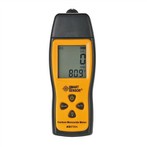
1. Nustatyti jei ten yra a problema su the residual current operated protector yourself
The method is to disconnect the fuse on the phase line of the AC contactor controlling the low-voltage line at the distribution transformer. If the residual current operated protector can be put into operation normal at this time, it proves that the residual current operated protector is good. Otherwise, the residual current operated protector should be repaired and replaced.
2. Check and determine which phase line has leakage
The method is to disconnect the neutral wire on the outlet side of the AC contactor controlling the low-voltage line at the distribution transformer, and then install the removed fuse core on one of the phases. Use a clamp ampmeter to measure the phase, and the measured current is the leakage current of that phase. Measure the leakage current of the leakage phases in sequence using the same method.
To prevencija the occurrence of high current damage to the instrument due to phase grounding on the line (such as someone stealing electricity us use the one line, one place method), first place the clamp type ampmeter in the high current position during testing; If the detection value is very small, then switch the clamp ampmeter gear to milliampere gear for detection.
Po nustatymas fazė linija su nuotėkis, nustatyti vieta nuotėkis
The method is to insert a fuse core into the phase line to be inspected at the distribution transformer, disconnect the neutral line and the fuses of the other two phases, and use a clamp type ampmeter to detect the live phase line on the pole to determine the leakage position. To improve efficiency, the pole mounting position can be selected in the middle of the line, and the leakage position can be determined detecting whether it is in the first or second half of the line, and then to detect the suspected leakage section of the line. Pagal analogiją, siauras the detection range* Afterwards, the pillar insulators of the phase line within a determined small range will be tested, and the user's household line phase lines connected to the phase line within this range will be tested (arba on the ground or tuo pačiu metu per insulation detection) to determine the specific location of leakage.
In the case of low voltage line power transmission, clamp type ampmeters can also be used to detect low-voltage user connecting wires within the suspected range. During detection, the phase and neutral wires of single-phase users should be placed in the jaws of the clamp ampmeter at the same time, and the three phase and neutral wires of three-phase consumers should also be placed in the jaws at the same time. If there is no leakage fault, then the phase sum of the load current magnetic flux is zero, and the indication of the clamp ampmeter is also zero; If there is leakage current, the clamp ampmeter can detect it.
4. Patikrinkite the user's internal wiring and equipment for leakage
The method is to use a clamp ampmeter to measure the leakage current at the user's power input line, and at the same time, put the user's electric equipment and lamps into and out one by one. By check the clamp ampmeter to detect changes in the leakage current, locate the leaking equipment and lamps. If all the equipment and lighting fixfixs are in good condition, or if the equipment with leakage has been removed, but the clamp ampmeter shows that the user still has leakage current, it is possible that the user's low-voltage circuit has leakage, and it should be handled according to the specific situation. For leakage faults in pre laided and hiddened pipelines, only replacement or rewiring methods can be adopted.